Background
Non-Take-Up of Social Benefits
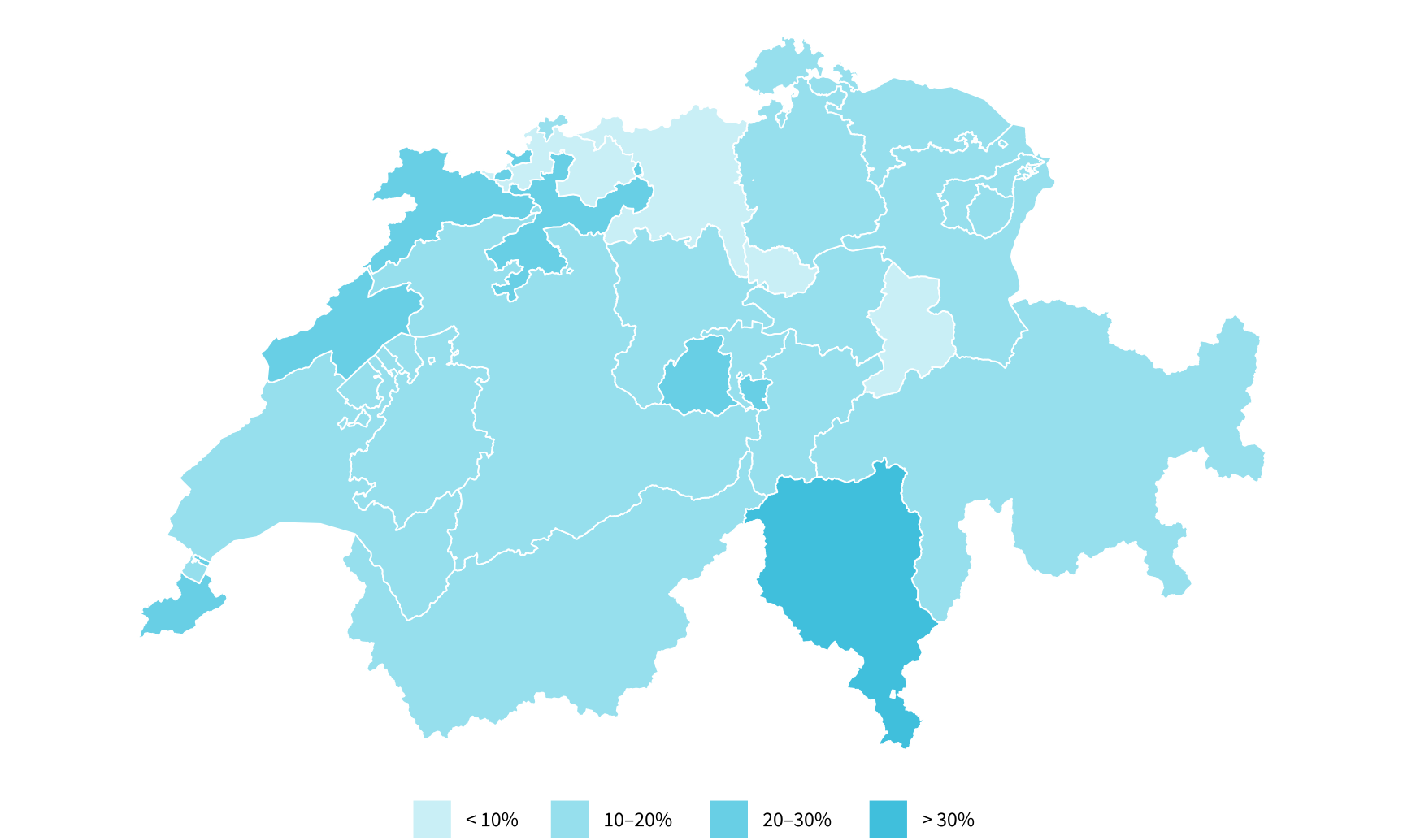
In Switzerland, many people do not receive the social benefits to which they are actually entitled. This phenomenon is referred to as “non-take-up.” Depending on the benefit, this affects between 10 and 40 percent of all eligible individuals, meaning that out of ten people who could actually receive support, up to four do not even apply for it. As Figure 1 shows, non-take-up rates also vary significantly between cantons. Older adults, people with little formal education, and people with a migration background are particularly affected.
Explaining Non-Take-Up
Why are people not applying for benefits to which they are entitled? The reasons are manifold. Some simply do not know that a particular benefit exists or that they are eligible for it. Others are put off by the effort involved or fear being labeled as needy. Still others are deterred by complicated procedures and confusing forms.
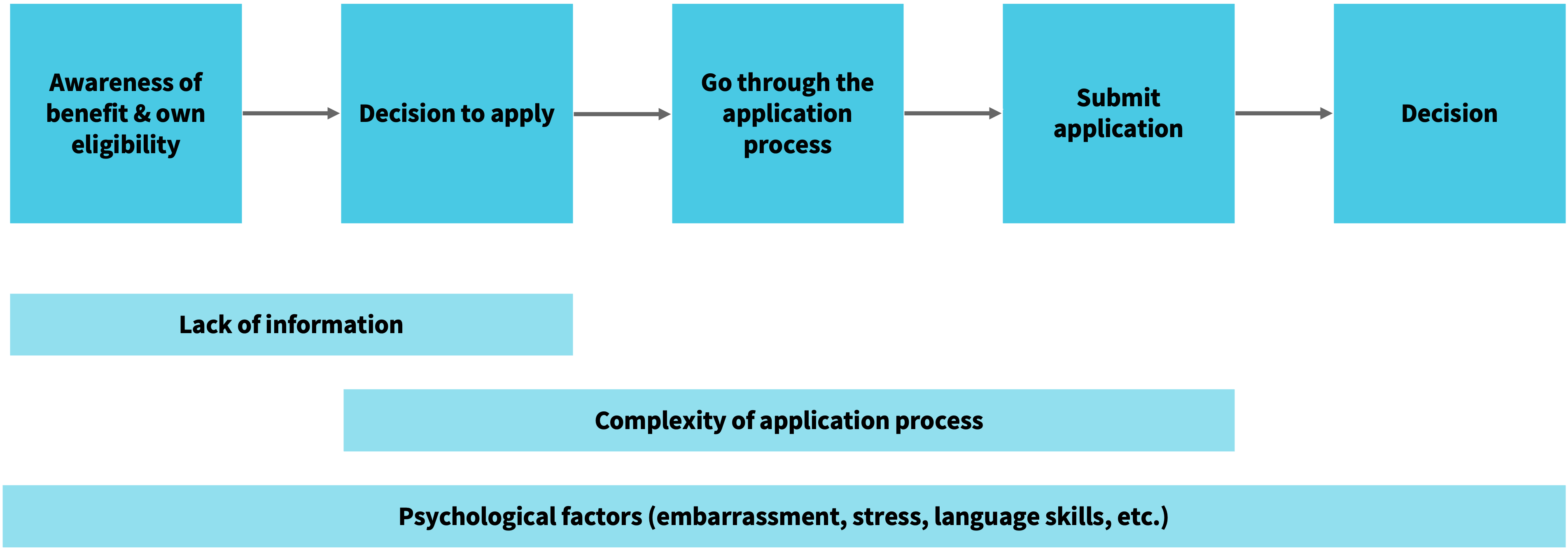
Research summarizes these obstacles under the term “administrative burdens. ” It distinguishes three types of barriers that can arise throughout the application process (see Figure 2):
- Information barriers arise when people do not know what benefits are available, whether they are eligible, or how to apply.
- Procedural barriers arise from the practical effort involved: gathering documents, filling out forms, and meeting deadlines.
- Psychological barriers arise from stress, shame, or the feeling of being unable to cope with the process.
Crucially, these barriers do not affect everyone equally. Those with less education, less experience dealing with government agencies, or less confidence in handling forms find it significantly harder to exercise their rights.
The Role of Language as a Barrier
Language is a particularly significant yet often underestimated barrier. Official documents are frequently written in a complex administrative style that is difficult to understand even for native speakers. For people who do not speak German as their first language, the barrier is even higher - even when translations are available, they are of little help if the content remains fundamentally inaccessible.
Language complicates access on multiple levels simultaneously: If someone doesn’t understand an information sheet, they won’t know whether they’re eligible at all. If someone can’t fill out a form, they won’t submit an application. And if someone has to rely on outside help at every step, they find the experience burdensome and humiliating.
Yet language barriers are not a problem that affects only immigrants. Many people who grew up in Switzerland also struggle with complex official texts. Studies estimate that around one-fifth of the adult population in Switzerland has difficulty reading and writing in everyday life.